
E-Commerce Integration and Fulfillment: Where Most Growing Brands Get Stuck
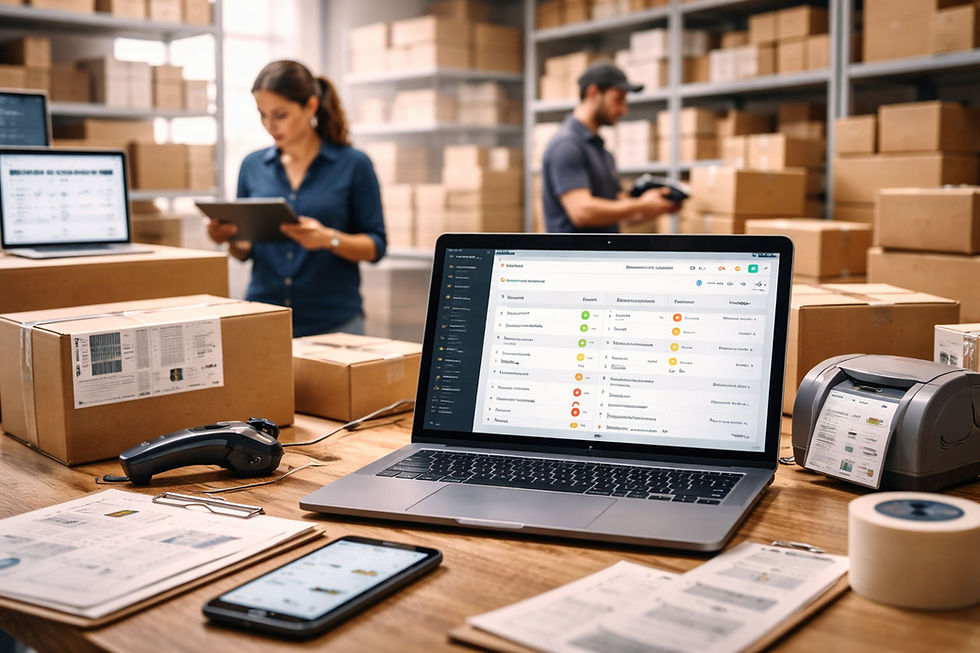
As order volume increases, many e-commerce problems do not start with shipping or carriers. They start with systems that cannot keep up. Inventory falls out of sync, orders require manual fixes, and teams spend more time troubleshooting than fulfilling.
For growing e-commerce brands, integration between sales channels and fulfillment is not a technical afterthought. It is what determines whether operations stay manageable or slowly turn into daily friction.
E-commerce integration connects your storefronts, marketplaces, inventory, and fulfillment operations into a single workflow. When it works properly, orders move automatically, inventory stays accurate, and customers get what they expect without delays.
What E-Commerce Integration Actually Covers
E-commerce integration is often reduced to the idea of “connecting a store to a warehouse.” In practice, it is about how information moves from the moment an order is placed to the moment it ships.
A properly integrated setup ensures that orders, inventory levels, and shipping data update automatically across platforms. There is no need for file exports, manual data entry, or end-of-day reconciliations.
When integration is done well, fulfillment becomes a support system for growth instead of a constant source of cleanup.
The Most Common Integration Breakdowns
When systems are loosely connected or partially integrated, problems show up quickly.
Inventory mismatches are one of the first signs. Products appear available online even though stock is low or depleted. This leads to overselling, canceled orders, and customer frustration.
Manual order handling creates avoidable delays. Teams copy information between systems, double-check details, and fix errors that should never have occurred.
Poor visibility makes planning difficult. Without real-time insight into inventory and order status, brands react to problems instead of anticipating them.
These breakdowns may seem manageable early on, but they rarely stay that way as volume grows.
How Integration Improves Fulfillment Speed and Accuracy
When sales channels are fully integrated with fulfillment operations, orders move faster with fewer errors.
Orders flow directly from e-commerce platforms into the fulfillment queue without manual steps. Inventory updates as items are picked and packed, keeping availability accurate across all channels.
This level of integration reduces processing time and improves consistency.
Fulfillment teams work from reliable data, and customers receive the correct items on schedule.
Managing Multiple Sales Channels Without the Headaches
Most established brands sell across multiple platforms such as Shopify, Amazon, Walmart, and other marketplaces.
Without proper integration, each new channel adds complexity. Inventory must be tracked separately, and mistakes become more likely.
Integrated e-commerce fulfillment keeps inventory and orders aligned across platforms. Brands can expand into new channels without multiplying operational risk.
The Role of Real-Time Syncing with Veeqo
Real-time syncing is what keeps integrated systems dependable.
With Veeqo, an Amazon-owned platform, inventory and order data stay connected across supported e-commerce channels. Updates happen automatically, reducing the need for manual oversight.
This setup allows fulfillment teams to focus on processing orders instead of correcting data and gives brands clearer visibility into day-to-day operations.
Integration as a Foundation for Scaling
As order volume increases, inefficiencies become harder to ignore. Temporary workarounds that once felt acceptable begin to slow everything down.
E-commerce integration provides a foundation that supports growth. Systems remain connected, data stays accurate, and fulfillment remains predictable even during busy periods.
For brands planning to scale, integration is not optional. It is part of building an operation that can grow without constant intervention.
Building a More Reliable Fulfillment Operation
Reliable fulfillment depends on clean data, connected systems, and consistent processes. E-commerce integration ties these elements together.
Packing Pros supports e-commerce brands with integrated fulfillment powered by Veeqo. Orders sync in real time, inventory stays accurate, and fulfillment runs smoothly across multiple sales channels.
If your business is selling across multiple platforms or preparing to scale, call 516-758-3223 to talk with a team that understands e-commerce integration and fulfillment.


Comments